Car Shipping from DC, Northern Virginia & Maryland: 2026 Cost & Options Guide
If you're moving out of the DMV and don't want to drive your car 1,500+ miles behind the moving truck, auto transport is the answer. Here's what car shipping actually costs from DC, Northern Virginia, and Maryland in 2026 — open vs. enclosed, real price ranges by route, and how to coordinate it with your household-goods move so the car and the couch don't arrive a week apart.
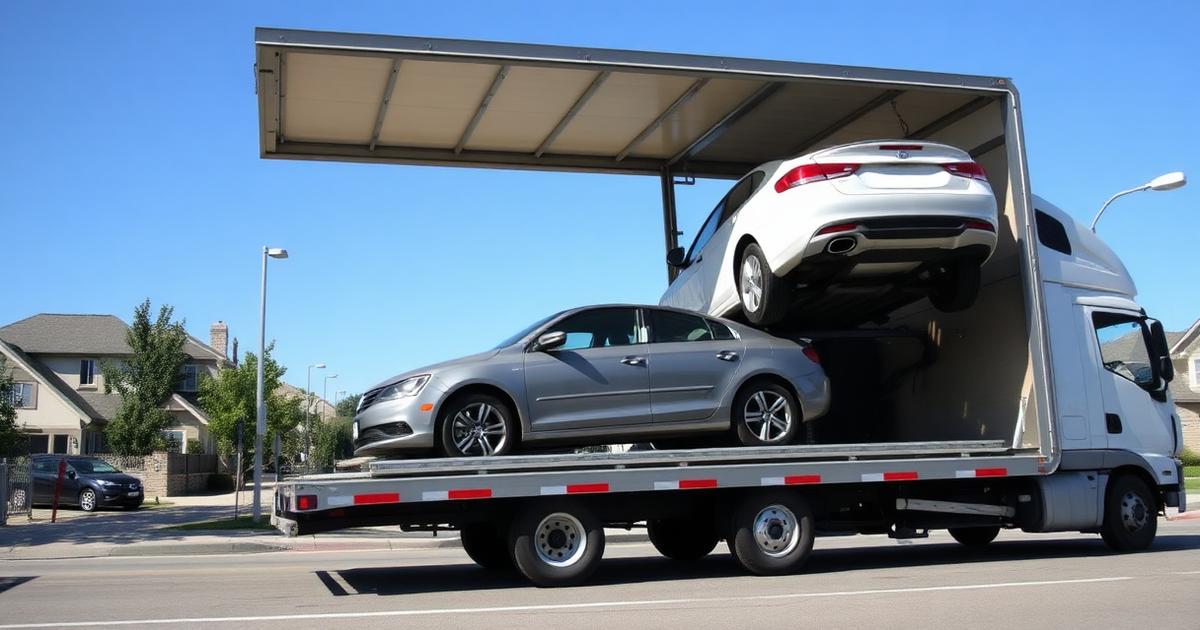
Short Answer
From the DC / NoVA / MD area in 2026, open transport runs $600–$1,100 for East Coast routes, $900–$1,400 to the Midwest or Southeast, and $1,300–$1,900 coast-to-coast. Enclosed transport adds 40–70% and is used for exotics, classics, EVs, and cars worth $80K+. Pickup happens 1–7 days after booking; transit is roughly 1 day per 400–500 miles. The single biggest mistake DMV movers make: booking auto transport separately from their household-goods move and ending up with a car in California and a truck in DC on the same day.
What Car Shipping from the DMV Actually Costs (2026)
Prices are set by distance, route density, vehicle size, and season. The DMV is a great origin — auto carriers run I-95 constantly, so open transport is cheap and pickup windows are short. Enclosed is a smaller pool of trucks and prices reflect it.
Open transport — typical 2026 rates from DC / NoVA / MD
| Destination | Approx. miles | Sedan / small SUV | Large SUV / truck |
|---|---|---|---|
| New York / NJ / Boston | 230–450 | $500–$800 | $650–$950 |
| Charlotte / Raleigh | 400–550 | $550–$850 | $700–$1,000 |
| Atlanta | 640 | $700–$1,000 | $900–$1,200 |
| Chicago | 700 | $800–$1,150 | $1,000–$1,400 |
| Miami / Orlando / Tampa | 950–1,050 | $900–$1,300 | $1,100–$1,600 |
| Dallas / Houston | 1,400–1,500 | $1,100–$1,500 | $1,300–$1,800 |
| Denver | 1,700 | $1,200–$1,600 | $1,400–$1,900 |
| Los Angeles / Seattle | 2,300–2,800 | $1,300–$1,900 | $1,500–$2,300 |
Enclosed transport — add 40–70%
Same routes, but with a covered trailer, lift-gate loading, and often a smaller (2–6 car) hauler. Rule of thumb: multiply the open rate by ~1.5× for a standard enclosed quote, or ~1.7–2× for a hard-sided, single-vehicle liftgate trailer used for exotics.
1) Route density. DC → Florida or DC → LA are heavy lanes — cheap and fast. DC → rural Montana pays a premium because the carrier deadheads back. 2) Season. January "snowbirds" heading DC → FL push prices up 15–25%; summer PCS season (May–August) tightens capacity nationally. 3) Vehicle size & running condition. Non-running (inop) vehicles need a winch and cost $150–$300 more. Lifted trucks, dualies, and oversized SUVs cost 15–25% more than a standard sedan.
Open vs. Enclosed: How to Actually Choose
Choose open transport if…
- Your vehicle is a daily driver worth under ~$80K.
- You're OK with a little road grime on arrival (it washes off).
- You want the cheapest, fastest booking window — open trailers cover 95% of auto-transport capacity.
Choose enclosed transport if…
- The vehicle is a classic, exotic, low-clearance sports car, or collector piece.
- It's a new EV or luxury car worth $80K+ where paint / wheels / batteries matter.
- You're moving in winter through Ohio/PA/upstate NY and want to avoid road salt.
- You need lift-gate loading (low ground clearance under ~4 inches).
The middle ground: "top-load" open
If you're going open but nervous about drips from the car above yours, ask for a top-load position on the trailer — usually $75–$150 extra. Nothing above you means no fluid drips and no rocks kicked down.
How Car Shipping from the DMV Actually Works
- Get a quote (60 seconds online, or via phone with a real broker/mover). You need year/make/model, running condition, ZIP-to-ZIP, and target pickup date.
- Book & deposit. Most carriers take a small deposit ($100–$250) to dispatch a driver; the balance is due at delivery (often cash/certified check to the driver, or ACH to the broker).
- Dispatch window. A driver is assigned within 1–7 days. You'll get a name, DOT number, and a 1–2 day pickup window.
- Pickup inspection. The driver walks the vehicle, notes existing damage on a Bill of Lading, and takes photos. Take your own dated photos too.
- Transit. Roughly 1 day per 400–500 miles. The driver typically calls 12–24 hours ahead of delivery.
- Delivery inspection. Walk the car again in daylight before you sign. Note any new damage on the Bill of Lading before you sign — that's your only leverage for a claim.
Auto haulers are 75-foot long, 13-foot tall rigs. They physically cannot access most of the following: Georgetown, Capitol Hill row-house streets, Old Town Alexandria, Kingstowne interior loops, or high-rise garages in Rosslyn / Ballston / Bethesda. Expect the driver to ask you to meet at a large open lot nearby — usually a strip-mall lot, a park & ride, or a Metro parking lot. Pre-scout the meet point when you book.
How Car Shipping Coordinates with a Professional Move
This is the part most people miss. A moving company and an auto-transport carrier are two separate operations — a household-goods (HHG) van almost never carries passenger vehicles on the same trailer. The goal isn't to combine them onto one truck; the goal is to time them to arrive in the same 1–3 day window.
The right sequence
- Book your long-distance mover first. Lock the pickup date and get the delivery window (long-distance HHG deliveries are windows, not exact dates — usually 3–10 days for cross-country).
- Then book auto transport to arrive on the middle day of that window. Cars are more flexible — they can sit at a driver's yard or terminal for a day if needed.
- Ship the car before the household goods if you can — you want a vehicle at the destination when the truck arrives so you can shuttle boxes, do a target run, and get the kids around town.
- Never ship the car after HHG unless you have a rental waiting. Household goods usually arrive first, and being carless in a new city with a garage full of unpacked boxes is a genuine headache.
What real DMV movers do for you
An experienced long-distance DMV mover already has 2–3 vetted auto-transport partners. Rather than sending you off to price-shop on the broker aggregators, ask your mover for a coordinated quote — HHG + auto together — so both pieces are scheduled against the same delivery window and one project manager owns both timelines.
Most "car shipping quote" websites you'll find on Google are brokers, not carriers. That's not automatically bad (brokers dispatch most legitimate loads), but the scammy ones lowball your quote to win the deposit, then can't find a driver at that price and try to renegotiate. Red flags: quotes wildly below the ranges in this guide, no MC/DOT number on the website, no signed dispatch agreement in writing, or a $500+ upfront "deposit." Always verify the broker on the FMCSA SAFER database before paying anything.
Prep Checklist Before the Driver Arrives
- Wash the car the day before. Clean paint makes it easier for both you and the driver to document existing scratches and dings.
- Take dated photos of all four corners, roof, hood, wheels, and any existing damage — with timestamps.
- Fuel tank ¼ full or less. Reduces weight and is a DOT-recommended level for haulers.
- Remove all personal items. Auto carriers' cargo insurance covers the vehicle, not what's inside it. Also — cars on open trailers can be broken into. A cheap sunglasses case gone missing is not a covered claim.
- Disable toll transponders (or bag them in foil) so you don't rack up phantom tolls through 8 states.
- Disable alarm systems or provide clear instructions — nothing worse than the driver's phone ringing at 2 AM in a truck stop.
- Retract antennas, fold mirrors if possible.
- Extra keys. Give the driver one key; keep your primary.
- Confirm ground clearance. Anything under 4 inches (Corvette, lowered cars) needs enclosed with a liftgate — mention it up front.
Insurance & Claims
Every licensed auto transporter carries cargo insurance — typically $100K–$250K per vehicle on open trailers and $500K–$1M+ on enclosed. This is separate from your personal auto policy and covers damage caused during loading, transit, or unloading.
- Ask for the carrier's insurance certificate before pickup — a legitimate carrier will send it instantly.
- Damage claims must be noted on the Bill of Lading at delivery, before you sign. This is critical. If you sign a clean BOL and discover damage later, claims are very hard to win.
- Photograph the vehicle at pickup and delivery with the driver and the trailer visible in frame.
- Your own auto policy may also cover transport damage — worth a call to your agent, especially for enclosed / high-value vehicles.
Should You Ship or Just Drive?
The breakeven from the DMV is roughly 700 miles. Under that, driving is almost always cheaper and faster once you factor in the wait for a driver. Over that, shipping usually wins on total cost and time.
| Route from DC | Cost to drive* | Cost to ship (open) | Days saved by shipping |
|---|---|---|---|
| DC → NYC (230 mi) | ~$100 | $500–$800 | 0–1 |
| DC → Atlanta (640 mi) | ~$250 | $700–$1,000 | 1–2 |
| DC → Miami (1,050 mi) | ~$450 + 1 hotel | $900–$1,300 | 2–3 |
| DC → Dallas (1,400 mi) | ~$600 + 2 hotels | $1,100–$1,500 | 3 |
| DC → LA (2,300 mi) | ~$1,000 + 3 hotels + wear | $1,300–$1,900 | 4 |
*Assumes 30 mpg, $3.30/gal, plus meals; excludes lost work days, wear/tear, and depreciation.
Long-distance move from the DMV? We'll coordinate the car too.
We handle DC / NoVA / MD long-distance moves every week and coordinate directly with vetted auto-transport partners. One project manager, one delivery window, one point of contact for both the truck and the car.
Call (703) 888-8332Frequently Asked Questions
What's the cheapest way to ship a car from DC?
Open transport, flexible pickup date (5+ day window), and ZIP-to-ZIP terminal drop-off (if the carrier offers it). Booking 2–3 weeks in advance also lets brokers match you to a truck already running your route rather than dispatching a special trip.
Can I put boxes or luggage in the car during shipping?
Officially, no — FMCSA rules prohibit HHG in a passenger vehicle on an auto hauler. Practically, many drivers allow up to 100 lbs of soft goods in the trunk at your own risk (not covered by cargo insurance). Never put valuables, electronics, or anything sentimental.
How much does it cost to ship a car from DC to Florida in 2026?
$900–$1,300 open transport for a sedan or small SUV; $1,300–$1,900 enclosed. Winter (January–March) runs at the top of that range because of snowbird demand. See our full DC-to-Florida moving guide for the household-goods side.
How much does it cost to ship a car from DC to California?
$1,300–$1,900 open, $2,000–$3,200 enclosed, for a standard sedan/SUV in 2026. Transit time is 7–10 days.
Do you ship cars, or do you coordinate it?
We're a moving company — we coordinate. That means we quote you the household-goods side ourselves, then bring in one of our vetted auto-transport carriers for the vehicle piece and manage the schedule so both arrive in the same window. You get one point of contact instead of two.
Are car shipping quotes negotiable?
Yes, within a range. If you have flexible pickup dates and are willing to wait 3–5 extra days, drivers will offer discounts to fill an empty slot on a truck already running your route. The published aggregator quotes are usually the ceiling, not the floor.
Is enclosed transport worth it for an EV?
For a Tesla Model 3 or Y — usually not, open transport is fine. For a Rivian, Lucid Air, Porsche Taycan, or Model S Plaid — yes, enclosed is worth the premium. Anything with a $100K+ replacement value or specialty paint should go enclosed.