DC Parking Permits for Moving: The Complete 2026 TOPPS Guide
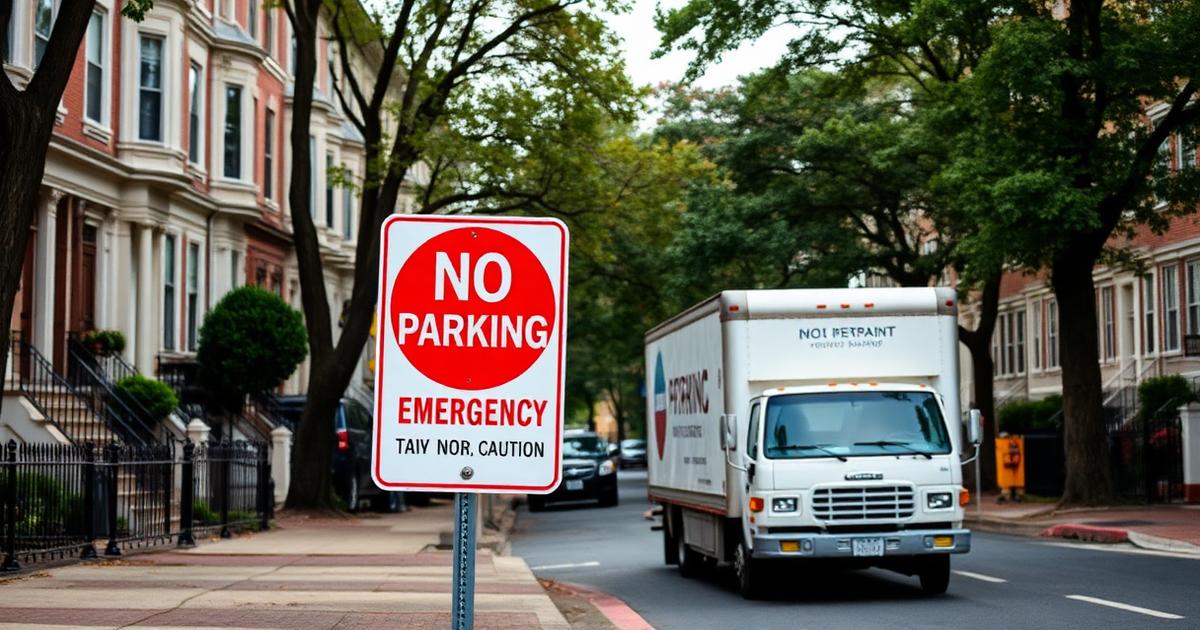
If you're moving in Washington DC, reserving curb space in front of your building is not optional — it is the difference between a smooth 4-hour move and a $300 tow bill plus a crew standing around while you hunt for a spot. Here is exactly how to pull a DDOT moving permit through the TOPPS system, what the Emergency No Parking signs cost, and the timing that keeps enforcement on your side.
Short Answer
To reserve parking for a moving truck in DC, apply for a Public Space Occupancy permit through the DDOT TOPPS portal (topps.ddot.dc.gov). Budget roughly $70-$120 for the permit and two Emergency No Parking signs, apply at least 10 business days before your move, and post the signs on the curb at least 72 hours in advance. Your moving company can pull the permit for you.
Skip the permit hassle. We pull your DC moving permit and post the signs for you. Local moves from $399 (2 movers + truck, first 2 hours).
Get My Free Quote Call (703) 888-8332DC Moving Permit Quick Facts
| Item | Answer |
|---|---|
| Where to apply | DDOT TOPPS portal (topps.ddot.dc.gov) |
| Total cost | About $70-$120 (permit + 2 signs) |
| Apply by | 10 business days before the move |
| Post signs | At least 72 hours before the move |
| Signs needed | 2 for most trucks ($25 each) |
Do You Actually Need a Permit?
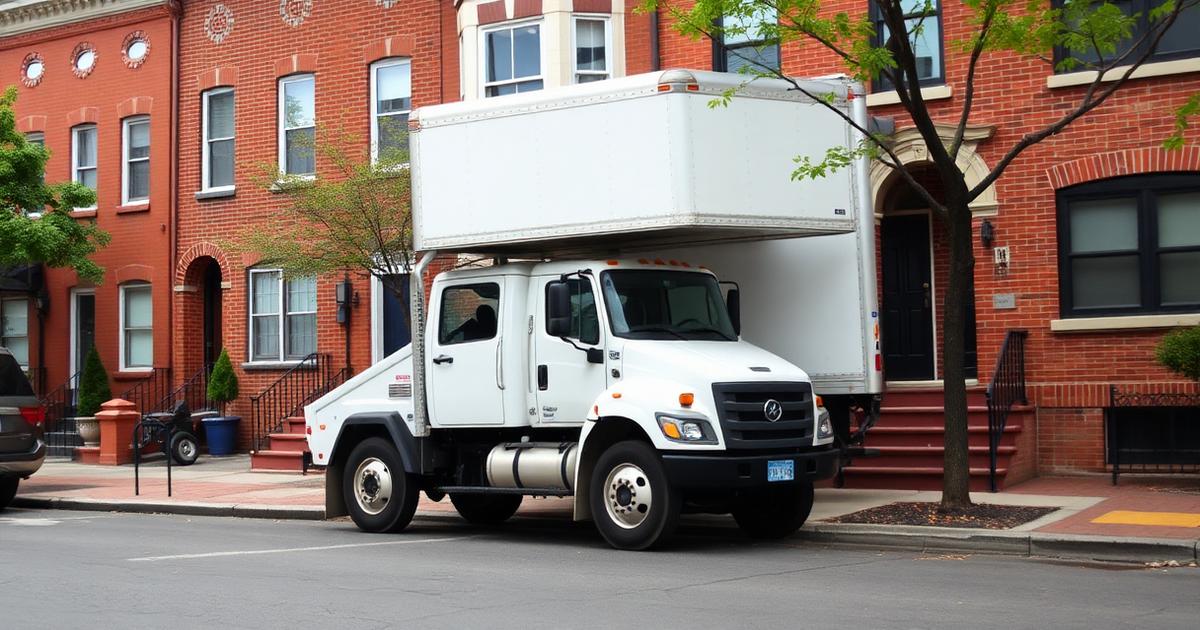
Yes, almost always. In most of DC — Capitol Hill, Dupont, Logan Circle, Shaw, Georgetown, H Street, Petworth, Columbia Heights, U Street, Adams Morgan — the streets are narrow, parking is metered or Residential Permit Parking (RPP) zoned, and there is simply no legal way to hold 40 feet of curb for a 26-foot moving truck without a permit.
You can skip the permit if:
- You have a private driveway or off-street loading dock the truck can use.
- Your building has a dedicated loading zone (some newer condos in NoMa, Navy Yard, and The Wharf do).
- You're moving out of an apartment building with a service entrance that fronts a legal commercial loading zone.
For everyone else — especially anyone in a row house or a walk-up — a DDOT moving permit is the only legal way to keep the truck within carrying distance of your front door.
What Is TOPPS?
TOPPS stands for the Transportation Online Permitting System, run by the DC DDOT (District Department of Transportation) Public Space Regulation Division. It is the online portal where residents, contractors, and movers apply for anything that occupies public space in DC, including:
- Moving truck reservations (the one you want)
- PODs and portable storage containers placed at the curb
- Dumpsters
- Construction staging
- Block parties and film shoots
The portal lives at topps.ddot.dc.gov. You create a free account with an email and phone number, then submit and pay for applications online.
Cost Breakdown for a DC Moving Permit
| Item | Typical 2026 Cost | Notes |
|---|---|---|
| DDOT application / occupancy fee | ~$25-$70 | Based on linear feet of curb and days requested. |
| Emergency No Parking signs | $25 per sign | Most moves need 2 signs (one at each end of the reserved curb). |
| Extra signs for a longer truck | +$25 each | Tractor-trailers and long-distance vans may need 3-4. |
| Optional: mover posts the signs | $50-$100 flat | Saves you a trip to the DDOT Permit Office. |
For a typical row-house move in Capitol Hill or Petworth with one 26-foot truck, expect a total of about $70-$120. Long-distance moves using a 53-foot tractor-trailer usually run $150-$200.
Step-by-Step: How to Pull a DC Moving Permit
Step 1 — Create a TOPPS account
Go to topps.ddot.dc.gov and register with your name, email, phone number, and DC address. Verify the email link before you continue.
Step 2 — Start a Public Space Occupancy application
Choose Occupancy Permit → Moving Truck. You'll enter:
- The exact street address where the truck will park (the one you're moving into or out of).
- Start and end date. Most residential moves request a single day; long-distance loads sometimes request 2 days.
- Start and end time (usually 7 AM to 7 PM to cover the full move window).
- Length of curb needed. Rule of thumb: 40 feet for a box truck, 60 feet for a large moving van, 80 feet for a tractor-trailer.
- Number of Emergency No Parking signs (usually 2).
Step 3 — Pay online
DDOT will calculate the fee and charge your credit card. You get a permit number and an email receipt immediately.
Step 4 — Pick up the Emergency No Parking signs
After payment clears (usually within 3-5 business days of application approval), signs are ready for pickup at the DDOT Public Space Permit Office at 1100 4th Street SW, 2nd Floor. Bring your permit number and photo ID. Your moving company can pick them up on your behalf if you email them the permit PDF.
Step 5 — Post the signs at least 72 hours before your move
This is the step people mess up. DDOT will only enforce your reserved space if the signs have been posted on the curb for a full 72 hours (three days) before your move-day start time. Zip-tie or tape them to:
- Parking meters
- Street sign poles
- Trees (avoid nailing — use zip ties or heavy tape)
Place one sign at each end of the reserved curb space so drivers approaching from either direction can see it. Write in the date, time window, and permit number in permanent marker on the blank fields.
If you post the signs on Friday for a Sunday morning move, DPW enforcement will not tow the car blocking your space — the 72-hour clock hadn't finished. Post on Wednesday for a Sunday move, or Tuesday for a Saturday move.
Step 6 — Call enforcement on move day if the space is blocked
If a car is parked in your reserved space when your movers arrive, call the DPW parking enforcement number printed on the Emergency No Parking sign. An officer will come, ticket the vehicle, and — if the driver doesn't move it — call a tow truck. This can take anywhere from 30 minutes to 2 hours, so call the moment you see the problem, not after your movers have been idling for an hour.
Emergency No Parking Signs — What They Look Like and What They Say
DDOT Emergency No Parking signs are bright orange 11x17 placards that say EMERGENCY NO PARKING across the top. Below that you fill in:
- The date(s) parking is reserved
- The time window (for example 7:00 AM to 7:00 PM)
- The permit number
- The reason ("MOVING TRUCK")
- The DPW enforcement phone number (pre-printed)
The signs are the legal notice to every driver in the area. If they're missing details, faded, torn down, or posted less than 72 hours out, enforcement can refuse to tow.
Neighborhood-by-Neighborhood Notes
Capitol Hill, Eastern Market, H Street NE
Narrow one-way streets. Almost always need a permit. Watch for RPP-only blocks and street-cleaning days that overlap with your move window (Wednesday morning street cleaning is very common east of 8th Street).
Dupont, Logan Circle, Shaw
Metered blocks — DDOT will bag the meters for you as part of the permit. Two signs almost always required. Trees are common posts; bring extra zip ties.
Georgetown
The Historic District has additional restrictions. Some blocks between M Street and R Street NW effectively cannot fit a 26-foot truck; talk to your mover about a shuttle from a smaller vehicle.
Columbia Heights, Petworth, Park View
RPP Zone 1 and Zone 4 blocks. Signs required. Street parking fills up fast on weekday evenings — schedule move-outs for morning or midday if possible.
NoMa, Navy Yard, The Wharf, Southwest Waterfront
Newer buildings often have private loading docks — check with your building manager first before pulling a DDOT permit. If the dock is booked, TOPPS is still your fallback.
PODs and Portable Storage in DC
If you're using a PODS, U-Pack, 1-800-PACK-RAT, or U-Haul U-Box container that will sit at the curb overnight or longer, you need a separate TOPPS Container Placement permit. Fees are calculated per day, and the same 72-hour signage rule applies. Containers on a private driveway do not need a permit.
What Happens If You Skip the Permit?
- No legal way to reserve the space. You're gambling that the curb will be open on move day.
- Your truck can be ticketed. Blocking a hydrant, bike lane, or crosswalk gets a $100-$300 ticket immediately.
- Your truck can be towed. If DPW decides your truck is impeding traffic on a narrow street, they will call a tow — recovery from the DC impound lot runs about $150 plus daily storage.
- Your move gets longer and more expensive. Every extra 100 feet the crew has to carry your stuff turns into "long carry" fees and hourly overage. A $900 move can quickly become a $1,400 move.
A one-bedroom Capitol Hill move done with a proper $80 permit versus without: the permitted move averages 3.5-4 hours. The unpermitted move — when the curb is full and the truck has to park two blocks over — averages 5.5-6.5 hours. At $170/hour, that's a $340-$425 difference. The $80 permit pays for itself many times over.
How Top Movers Pro Handles DC Permits
We pull DDOT moving permits for our DC customers every week. If you want us to handle it, here's what happens:
- You give us the exact street address, truck size we're bringing, and your preferred move date at least 10 business days out.
- We submit the TOPPS application in your name and pay the DDOT fees. We invoice you at cost plus a flat $50 service fee to cover pickup and posting.
- Our team picks the signs up from the DDOT permit office and posts them at your address 72 hours before your move — with photos sent to you as proof.
- On move day, we make the enforcement call if anyone parks in the reserved zone.
If you'd rather DIY, that's fine too. We're happy to walk you through the TOPPS form on your first call — no charge.
Moving in DC? Let Us Handle the Permit.
Quote in 60 seconds. We pull the DDOT permit, post the signs, and make sure the curb is clear when the truck arrives.
Call (703) 888-8332Frequently Asked Questions
How much does a DC moving parking permit cost in 2026?
Budget about $70-$120 total: a DDOT public space application fee (usually $25-$70 depending on curb length) plus $25 per Emergency No Parking sign. Most residential moves need two signs.
How far in advance do I need to apply?
Apply at least 10 business days before your move. TOPPS applications commonly take 3-5 business days to review, and the signs must then be posted on the curb for a full 72 hours before enforcement will act on your reserved space.
What if someone parks in my reserved moving zone?
Call the DPW enforcement number printed on the Emergency No Parking sign. If your signs were posted 72+ hours in advance and are properly filled out, an officer will ticket and — if needed — tow the vehicle at the owner's expense.
Do I need a permit for a POD or storage container?
Yes, if the container sits in the public right-of-way (street or curb) at any point. Driveway placements don't need a permit. The application is a separate Container Placement permit through the same TOPPS portal.
Can my moving company pull the permit for me?
Yes. Most established DC movers, including Top Movers Pro, will pull the DDOT permit, pick up the signs, and post them for you — usually at cost plus a flat service fee ($50-$100).
What if my move date changes after I've pulled the permit?
You can request a date modification through TOPPS as long as the new date is at least 72 hours out. There is usually no additional fee for a first date change, but you'll need to re-post the signs so the new date is displayed.
Do military PCS moves get any DC permit discount?
DDOT does not waive the permit fee for PCS moves, but we do apply our 5% military discount to the labor portion of your Top Movers Pro invoice — including any permit service fees. Have your orders ready when we quote you.