How to Pack for a Move: Room-by-Room Guide (2026)
Packing is the part of moving everyone dreads — and the part that determines whether your dishes survive and whether you can find your toothbrush on night one. This room-by-room guide breaks down exactly how to pack efficiently, safely, and with your sanity intact.
Before You Start: The Prep Phase
Don't touch a box until you've done these three things:
- Declutter first. Every item you donate before packing is an item you don't move, unpack, or find space for. Go room by room and be ruthless. If you haven't used it in a year, it goes.
- Get the right supplies. You'll need: small boxes (books, heavy items), medium boxes (most everything), large boxes (linens, lamps), wardrobe boxes (clothes on hangers), dish packs with dividers, packing paper, bubble wrap, tape, and a Sharpie. Buy 20% more than you think you need.
- Set a packing schedule. Most people underestimate packing time by half. A 2-bedroom home takes 2–3 full weekends to pack solo. Start 3–4 weeks before move day and aim for one room per weekend.
How to Pack the Kitchen
The kitchen is the hardest room to pack. Start here while you're still motivated.
Plates and Dishes
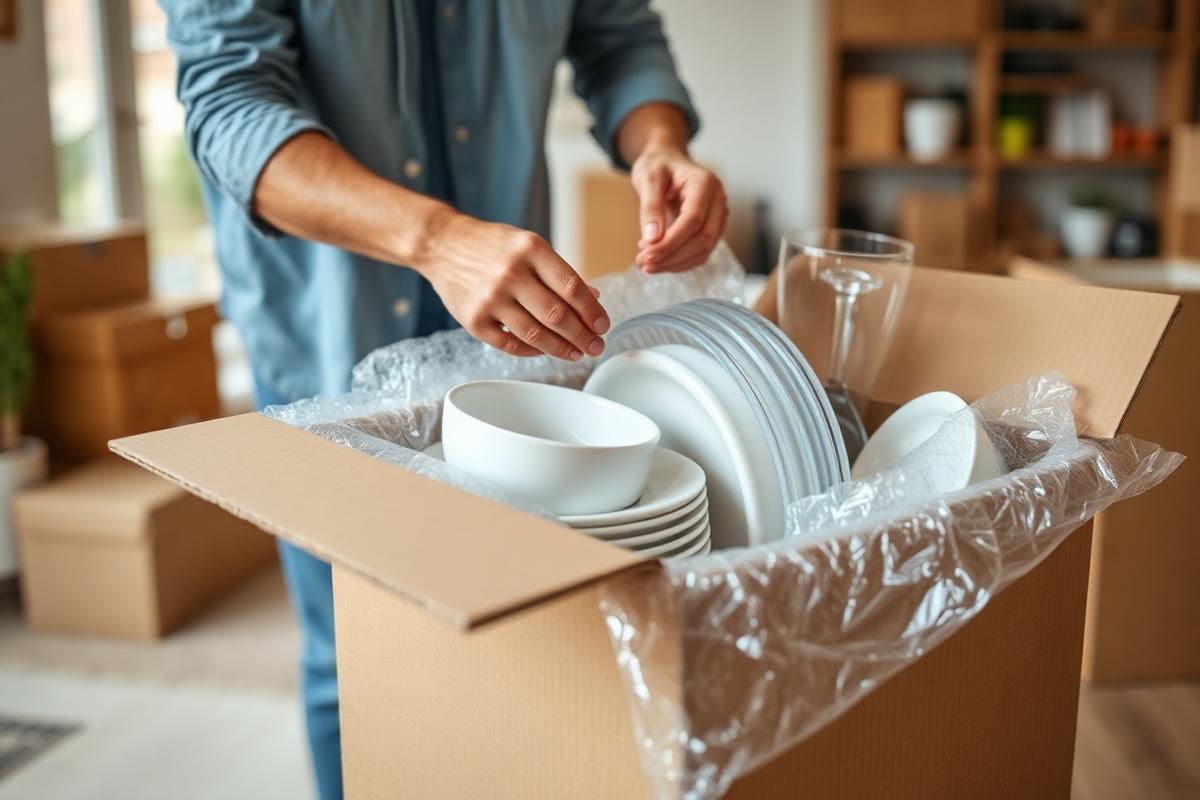
Wrap each plate in packing paper, then stack vertically in a dish box (like records in a crate) — never flat. Vertical stacking distributes weight and prevents bottom-plate breakage. Fill gaps with crumpled paper so nothing shifts.
Glasses and Stemware
Wrap each glass individually. Stuff the hollow interior with crumpled paper for extra support. Pack glasses in dish boxes with cardboard dividers. Never stack heavy items on top of glassware.
Pots and Pans
Nest pots inside each other with a sheet of paper between each. Pack lids vertically in their own box or slide them into the side of a pot box. These are heavy — use small boxes.
Pantry and Fridge
Start eating down your pantry two weeks before the move. Toss expired items. On move day, pack a cooler with essentials: milk, condiments, snacks, and whatever you'll need for the first 24 hours. Movers won't transport open food, alcohol, or cleaning chemicals.
- Kitchen packing time: 8–12 hours for a typical kitchen
- Boxes needed: 8–12 medium, 4–6 small, 2–4 dish packs
How to Pack the Bedroom
Clothing
For hanging clothes, wardrobe boxes are worth every penny. Transfer clothes directly from closet to box on the hanger. For folded clothes, keep them in dresser drawers if the mover is willing to wrap the dresser (we do). Otherwise, pack in medium boxes. Don't overfill — a box of clothes gets heavy fast.
Bedding and Linens
Use large boxes for bedding. They're light, so you can fill a large box without weight issues. Label the box " linens — open first" so you can make the bed on night one.
Shoes
Pack shoes in their original boxes if you have them, or wrap pairs together in packing paper. Stuff the toes with paper so they keep their shape.
Jewelry and Small Valuables
Pack jewelry in a small box or case and move it yourself. Never put valuables on the truck. The same goes for passports, deeds, and irreplaceable documents.
How to Pack the Bathroom
Bathrooms are small but full of liquids and breakables.
- Toiletries: Seal all liquid bottles with tape around the cap, then place each in a ziplock bag. Pack upright in a box lined with a towel.
- Medicine: Pack prescription medications in a clearly labeled bag and move them with you, not on the truck.
- Towels: Use towels as padding. Wrap them around fragile items or use them to fill gaps in other boxes.
- Cleaning supplies: Movers won't transport bleach, ammonia, or aerosols. Use them up or give them away before the move.
How to Pack the Living Room
Electronics
Save original boxes if you have them. If not, wrap TVs in moving blankets and place them in specially designed TV boxes. Take photos of cable setups before you disconnect anything — you'll thank yourself later. Remove batteries from remotes and controllers.
Books
Books are deceptively heavy. Use small boxes only. A large box of books can weigh 80+ pounds and will break apart or injure someone. Pack spine-down and fill gaps with paper.
Decor and Framed Art
Wrap framed art in packing paper, then bubble wrap. Tape an X across glass frames with painter's tape to prevent shattering. Stack frames vertically in a box with cardboard between each piece.
Furniture
Disassemble what you can — legs off tables, shelves out of bookcases. Keep screws and hardware in labeled ziplock bags taped to the furniture piece. Our crew disassembles and reassembles beds and tables at no extra charge.
How to Pack the Home Office
- Files: Pack files in file boxes or small document boxes. Keep them upright. Label by category.
- Electronics: Back up computers and external drives before moving. Transport laptops and hard drives with you, not on the truck.
- Cables: Coil cables, secure with zip ties or rubber bands, and label them. A shoebox of labeled cables is infinitely better than a bag of tangled mystery wires.
Labeling: The Secret to a Smooth Unpack
Label every box on two sides and the top with:
- Room ("Kitchen," "Master Bedroom")
- Contents ("Pots & Pans," "Winter Clothes")
- Priority ("Open First" for essentials, "Last" for storage items)
- Fragile if applicable
Use colored tape or stickers for each room so movers can sort boxes at a glance. Number boxes ("Kitchen 1 of 8") so you know immediately if one is missing.
What Not to Pack on the Truck
Important documents, jewelry, cash, prescription medications, laptops and hard drives, family photos (digital backups are fine), plants (many movers won't transport them), and anything irreplaceable. Pack a "first night" bag with a change of clothes, toiletries, phone chargers, basic tools, and bedding.
When to Hire Professional Packers
If any of these sound like you, consider our professional packing service:
- You're moving in under 2 weeks and haven't started packing
- You work full-time and can't spare weekends
- You have fragile antiques, artwork, or a large china collection
- You'd rather spend $500 than 3 weekends of your life
Our packing team handles a typical 2-bedroom home in 4–6 hours. All materials included. You show up to a fully packed home.
Too Much to Pack? We'll Do It for You
Our professional packing team handles your entire home in a single day. All materials included.
Call (703) 888-8332Frequently Asked Questions
How early should I start packing?
Start 3–4 weeks before your move. Begin with storage areas and off-season items. Pack daily-use items (kitchen, bathroom, bedroom) in the final week.
Should I empty dresser drawers?
Light clothing can stay in drawers if the dresser is sturdy. Remove heavy items, books, or anything fragile. Our movers wrap dressers and move them with clothing inside when appropriate.
Can movers move boxes I packed myself?
Yes, absolutely. Just make sure boxes are sealed, labeled, and not overpacked. Movers are not liable for damage to owner-packed boxes unless the box itself was visibly mishandled.