Moving Insurance Explained: Released Value vs. Full Coverage
The short answer: federal law requires every mover to include basic liability coverage for free, but that coverage only pays $0.60 per pound per item. For a 10-pound TV, that's $6. If you want real protection, you need to understand the difference between Released Value Protection and Full-Value Protection — and when to buy third-party insurance.
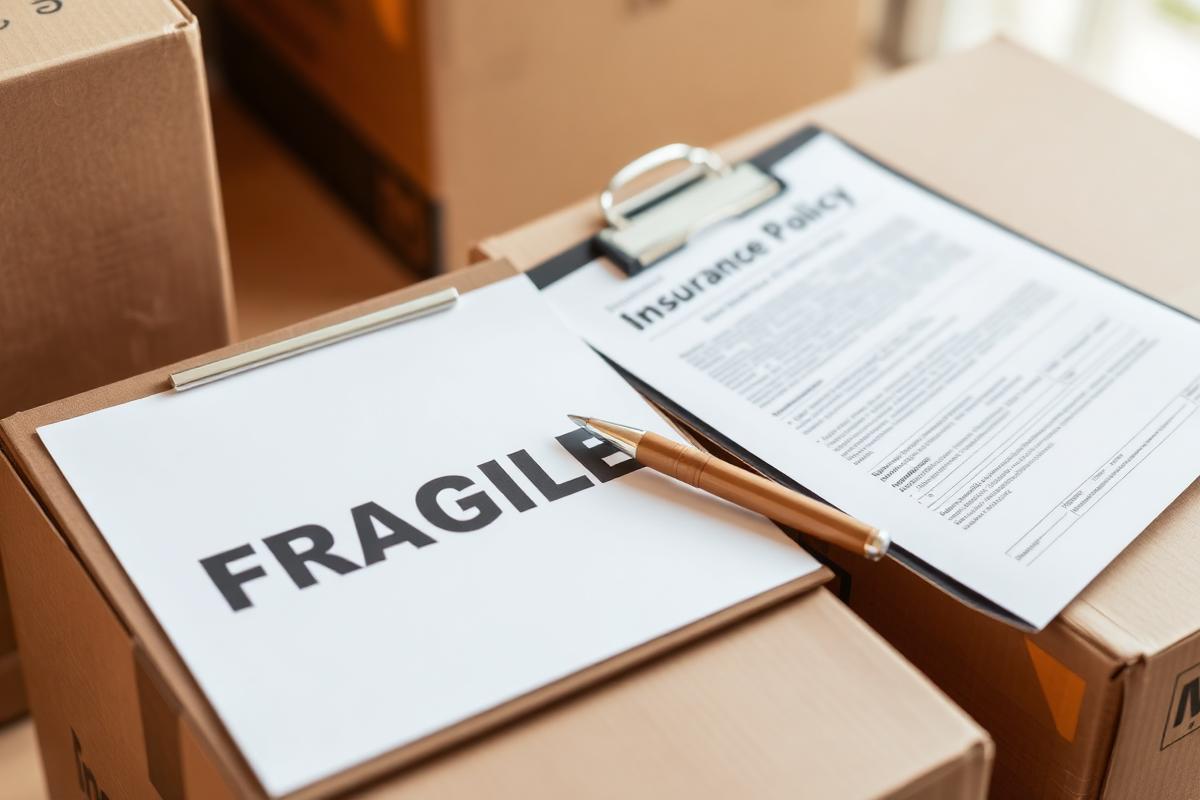
What Moving Insurance Actually Covers
Moving "insurance" is technically called valuation coverage — it's not insurance in the traditional sense, but a level of liability the moving company agrees to accept for your goods while they're in the mover's care. There are three tiers:
| Coverage Type | Cost | What It Pays | Best For |
|---|---|---|---|
| Released Value Protection | Free (included) | $0.60 per pound per item | Low-value, heavy items |
| Full-Value Protection | 1–2% of declared value | Repair, replace, or cash for lost/damaged items | Standard household goods |
| Third-Party Insurance | Varies ($150–$500+) | All-risk coverage up to policy limit | High-value items, antiques, art |
Tier 1: Released Value Protection (Free, But Minimal)
Every licensed interstate mover must offer Released Value Protection at no charge. It sounds like a good deal until you do the math:
- A 50-pound dresser damaged beyond repair → $30 payout
- A 10-pound flat-screen TV cracked → $6 payout
- A 5-pound laptop lost → $3 payout
Released Value is based on weight, not actual value. It makes sense for heavy, low-value items like dumbbells or patio furniture. For almost everything else in your home, it's essentially no coverage at all.
If you don't explicitly choose Full-Value Protection in writing before the move, you're automatically covered under Released Value — the minimal tier. Don't assume you're fully covered just because you hired a professional mover.
Tier 2: Full-Value Protection (Recommended)
Full-Value Protection is the standard coverage most customers should choose. Here's how it works:
- You declare the total value of your shipment (usually based on weight × $6 per pound, or your own estimate)
- If an item is lost, damaged, or destroyed, the mover must repair it, replace it with an equivalent item, or pay you cash for the current market value
- Cost is typically 1–2% of your declared value (e.g., $20,000 of coverage costs $200–$400)
There are exclusions. Full-Value Protection usually does not cover:
- Items you packed yourself (owner-packed boxes) unless the box itself was visibly damaged
- Damage from natural disasters, acts of God, or strikes
- Items of extraordinary value unless declared separately (jewelry, art, collectibles over $100 per pound)
Tier 3: Third-Party Moving Insurance
If you have high-value items or want broader protection, third-party insurers offer all-risk policies that cover:
- Mysterious disappearance (items that simply go missing)
- Damage from flooding, fire, or natural disasters
- Pairs and sets coverage (if one item of a set is damaged, the whole set is covered)
- Items you packed yourself
Third-party insurance is especially worth considering for:
- Antique furniture, fine art, or collectibles
- Long-distance moves (more transit time = more risk)
- Moves involving storage (warehouses add handling and environmental risk)
Reputable third-party moving insurance providers include Baker International and MovingInsurance.com. Expect to pay $150–$500+ depending on declared value and distance.
Does Your Homeowners or Renters Insurance Cover Moving?
Sometimes — but rarely comprehensively. Most homeowners and renters policies cover personal property "worldwide," which technically includes items in transit. However:
- Many policies exclude damage during professional moving (since the mover has primary liability)
- Deductibles often apply ($500–$2,500), which can exceed the value of the damaged item
- Making a claim can raise your homeowners premium
Call your insurance agent before the move and ask specifically: "Does my policy cover my belongings during a professional move?" Get the answer in writing.
How to File a Moving Damage Claim
If something is damaged or missing, act fast:
- Document everything on delivery day. Check boxes and furniture before the crew leaves. Note any visible damage on the mover's delivery receipt — this is called "noting exceptions" and it's critical for your claim.
- File a written claim promptly. Federal law gives you 9 months to file a claim for interstate moves, but don't wait. File within 30 days if possible. Include photos, receipts, and a description of the damage.
- Get repair estimates. For damaged furniture or electronics, get a written repair estimate from a qualified technician. This becomes the basis for your payout.
- Negotiate if needed. Movers have 30 days to acknowledge your claim and 120 days to resolve it. If the offer seems low, counter with your documentation.
How to Protect Yourself Before the Move
- Take photos of everything. Before the crew touches a single box, photograph furniture, electronics, and anything valuable. Timestamp the photos.
- Create a written inventory. Number your boxes and list what's inside each one. It's tedious but invaluable if something goes missing.
- Declare extraordinary value items. If you own art, antiques, or jewelry worth more than $100 per pound, tell your mover in writing before the move. Otherwise, those items may be capped at $100/lb even under Full-Value Protection.
- Read the Bill of Lading. This is your contract. It states your coverage level. Don't sign until you've confirmed it reflects the coverage you chose.
What Top Movers Pro Covers
Top Movers Pro includes basic liability coverage on every move at no additional charge. For local moves in the DMV, this covers damage caused by crew negligence during loading, transport, and unloading. For long-distance moves, we offer Full-Value Protection upgrades and can coordinate third-party all-risk coverage for high-value shipments.
Our claims process is simple: report damage within 7 days of delivery, submit photos and a description, and we respond within 48 hours. We repair or replace — we don't make you chase us.
Moving Something Valuable? Let's Talk Coverage
Not sure what coverage you need? We'll walk you through your options on a quick call.
Call (703) 888-8332Frequently Asked Questions
Is Released Value Protection really free?
Yes — it's included by law on every interstate move. But as noted, it only pays $0.60 per pound, which is almost never enough to cover real loss or damage.
Can I buy Full-Value Protection after the move starts?
No. You must choose your coverage level before the move begins, ideally when you sign the estimate or Bill of Lading. Once the truck is loaded, it's too late to upgrade.
Does moving insurance cover items I pack myself?
Generally no, unless the outside of the box was visibly damaged. If you want coverage for owner-packed boxes, third-party insurance is your best option.
Are there items movers won't cover at all?
Yes. Cash, jewelry, important documents, plants, and perishable food are typically excluded from all coverage levels. Move these items with you personally.